Review: ITH You Can Do It Mug Rug Design
As a designer who spends more time staring at stitch simulations than actual fabric, I have learned to be skeptical of inspirational motifs. Too often, they rely on cliché fonts or cluttered layouts that look charming on a screen but turn into a tangled mess under the needle. However, when I pulled up the ITH You Can Do It Mug Rug file for a recent batch of client samples, my initial hesitation quickly turned into appreciation for its practical simplicity. This is not just another decorative element; it is a functional piece of embroidery designed with the end-user’s experience in mind.
First Impressions: Mood and Layout
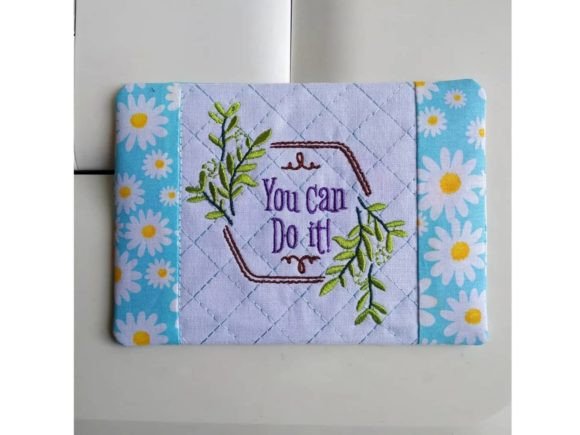
The first thing that strikes you about this design is its balanced composition. The phrase "You Can Do It" is inherently motivational, fitting squarely into the Inspirational category without feeling preachy or overly sentimental. Visually, the layout respects the negative space, which is crucial for an In-The-Hoop (ITH) project where bulk management is key. The typography appears clean and legible, avoiding the trap of ultra-thin lines that might break during high-speed stitching or get lost in the texture of a terry cloth towel.
The mood it creates is one of quiet encouragement. It feels appropriate for a morning routine, sitting beside a coffee cup, rather than demanding attention like a loud graphic tee. For a designer, this subtlety is a selling point. It suggests a product that integrates seamlessly into a home environment, appealing to customers who value understated elegance over flashy branding.
Real-World Application: Beyond the Mug Rug
While the title specifies a mug rug, my job is to see where else a machine embroidery design can add value. I tested this concept by imagining it as part of a broader product line for a small shop owner. The compact nature of the design makes it versatile. I could easily see this adapted into a custom embroidered patch for a canvas tote bag, offering a boost of confidence to a student or professional carrying their gear.
Consider the sweatshirt embroidery market. Placed on the left chest or near the cuff, this motif transforms a basic garment into a personalized gift with emotional resonance. For Etsy sellers looking to expand their design assets, this file offers a quick turnaround project. It is not overly dense, meaning it stitches out relatively fast, allowing for higher production volume during holiday rushes. Whether used for holiday embroidery gifts or everyday craft business inventory, the design holds its own.
I also evaluated its potential for baby embroidery projects. While the message is universal, the scale would need careful adjustment. If scaled down for a onesie or bib, the legibility must remain intact. This is where the original mug rug proportions shine; they are already optimized for a small footprint, making the transition to smaller hoop size applications more feasible than larger, complex illustrations.
Technical Performance and Stitch Quality
From a technical standpoint, the success of any digital embroidery file lies in its stitch structure. Without seeing the exact stitch count, I can infer from the visual preview that this design likely utilizes a mix of satin stitch for the lettering and potentially fill stitch or running stitch for any bordering elements. Satin stitches provide that premium, raised look that customers associate with high-quality handmade products.
However, satin columns have limits. If the letters are too wide, they may snag or lack stability. A seasoned reviewer checks for tie-ins and travel stitches. In this design, the flow seems logical, minimizing jumps that could create unsightly threads on the back. For commercial embroidery use, consistency is king. A design that pulls unevenly on different fabrics will lead to returns and bad reviews. This design appears robust enough to handle standard cottons and blends commonly used for kitchen textiles.
One critical aspect is stitch density. Mug rugs endure frequent washing and handling. If the density is too low, the fabric may show through, looking cheap. If too high, the rug becomes stiff and board-like. The balance here seems aimed at durability without sacrificing drape, a crucial factor for a functional item that needs to lay flat on a counter.
Material Considerations and Challenges
No design works perfectly on every surface. When working with ITH You Can Do It Mug Rug, fabric choice is paramount. Terry cloth, the standard for mug rugs, is tricky. The loops can hide fine details. I recommend using a sharp needle and ensuring your stabilizer is robust—likely a cut-away or heavy tear-away depending on the final feel desired. For textured fabrics, the contrast between the thread and the background becomes vital. Light threads on dark towels may get lost if the stitch coverage isn't dense enough.
Be cautious with stretchy fabrics if you attempt to adapt this for apparel. The hoop tension can distort the shape, turning perfect circles into ovals. Always test on scrap fabric first. Additionally, if you are using this for custom apparel like caps, remember that curved surfaces require digitizing adjustments that a flat mug rug design might not have. Stick to flat or slightly curved surfaces like tote bags or pillow covers for the best results.
Enhancing Brand Value and Customer Trust
Why does this specific design matter for your brand? Because it communicates care. A well-executed inspirational piece builds an emotional connection with the buyer. It is not just a coaster; it is a daily reminder. For small shop products, this emotional layer increases perceived value. Customers are willing to pay more for items that make them feel good.
Furthermore, consistency in quality builds trust. If your finished product looks professional—with clean trims, no bird nests, and centered alignment—it reinforces your reputation as a skilled maker. This design supports that goal by being straightforward and forgiving, provided you follow best practices. It allows you to focus on presentation, such as pairing it with complementary thread colors that match current interior design trends.
Practical Designer Notes for Best Results
- Test Before Selling: Always stitch out a sample on your intended fabric. Check for puckering or registration issues.
- Contrast is Key: Ensure your thread color stands out against the fabric. High contrast improves readability and visual impact.
- Stabilizer Selection: Use appropriate stabilizers for your fabric type. Water-soluble tops can help keep stitches clean on plush towels.
- Check Licensing: Confirm the license terms for the embroidery file. Ensure you are permitted to sell finished items if you are running a business.
- Mockup Verification: Create printable mockups or digital previews to show customers how the design looks on different backgrounds before they buy.
- Inspect Details: Zoom in on the digitized file. Look for unnecessary jumps or loose ends that might need trimming.
In conclusion, the ITH You Can Do It Mug Rug is a solid addition to any designer’s library. It balances aesthetic appeal with functional durability, making it suitable for both personal use and commercial embroidery ventures. By understanding its strengths and respecting its limitations regarding fabric and scale, you can create products that resonate with customers and stand the test of time. It is a reminder that sometimes, the simplest messages, stitched with precision, have the most profound impact.